The Science of Cyclopeptides
How the Cyclic Cystine Knot works, the difference between cyclotides and orbitides, and why the closed ring is the most important shape in drug delivery.
Read more →Cyclopeptides are circular proteins found in plants that survive boiling, acid, and digestion intact. Discovered in an African rainforest tea, they are now at the frontier of medicine — delivering drugs orally that once required injections.
What are cyclopeptides?
Most proteins are linear chains — think of them as a rope with two free ends. Those ends are exactly where enzymes attack, unravelling the chain. Cyclopeptides have no ends. Their amino acid chain loops back on itself, forming an unbroken ring.
The most remarkable subclass — cyclotides — go further. Six cysteine residues in the ring form three interlocking disulfide bonds, creating a structure called the Cyclic Cystine Knot (CCK). The result is a molecular architecture so compact and interlocked that it withstands boiling water, stomach acid, and the full battery of digestive enzymes.
Found in plants across five unrelated families — from the African Rubiaceae to European violets to legumes — cyclotides appear to have evolved independently multiple times, suggesting nature repeatedly converged on this structure because it is extraordinarily useful.
Explore the topics
From the molecular structure that makes them extraordinary, to the researchers who discovered them, to the companies turning them into medicines.
How the Cyclic Cystine Knot works, the difference between cyclotides and orbitides, and why the closed ring is the most important shape in drug delivery.
Read more →Most protein drugs are destroyed in the stomach. Cyclopeptides are not. Discover the structural properties that make oral delivery possible — and how scientists are using this to replace injections.
Read more →From a 1960s Congo rainforest — where women brewed a tea to accelerate labour — to the NMR spectroscopy breakthrough that revealed the cyclic structure. The history of the most remarkable molecules in plants.
Read more →How researchers engineer crop plants to act as sunlight-powered bioreactors — producing therapeutic cyclopeptides in potatoes, sunflowers, and soybeans at agricultural scale.
Read more →Multiple sclerosis. Chronic pain. Cancer. Obesity. HIV. A survey of the therapeutic applications in development — from human clinical trials to the cyclopeptide already in transplant wards worldwide.
Read more →The companies commercialising cyclopeptides around the world — from Australia's Phyllome and Innovate Ag, to US biotechs Circle Pharma and Insamo, to the $220M Merck deal reshaping oncology drug design.
Read more →The breakthrough
For decades, the pharmaceutical industry has faced a fundamental problem: the most powerful biological medicines — peptides and proteins — are destroyed in the gut before they can reach their targets. That forces patients onto injections for life.
Cyclopeptides break this rule. Their closed-ring backbone and interlocking disulfide bonds make them impervious to the digestive enzymes that destroy linear peptides. Researchers have demonstrated that therapeutic sequences can be grafted into a cyclotide scaffold, borrowing its stability to make any peptide drug orally deliverable.
[T20K]kalata B1 — a single-point mutant of the naturally occurring kalata B1 cyclotide — is currently in human clinical trials for multiple sclerosis, taken as an oral dose.
How it works →The scientists behind the science
Cyclopeptide science spans six decades and five continents. These are the researchers who built our understanding of circular proteins — from first isolation in the Congo to clinical trials in Sweden.
Institute for Molecular Bioscience, University of Queensland — Australia
Cyclotide family characterisation • Drug grafting • Plant pharming
The world's foremost authority on cyclotides. Craik's group at IMB UQ established cyclotides as a protein family, characterised the Cyclic Cystine Knot motif, and pioneered the drug-grafting technique that lets any therapeutic peptide borrow cyclotide stability — making oral delivery of biologics possible. His team of ~35 researchers have active projects in pain, obesity, and cancer, partnering with Pfizer, Roche, AstraZeneca, and Takeda. He also directs the ARC Centre of Excellence for Innovations in Peptide and Protein Science (CIPPS) and the Clive and Vera Ramaciotti Facility for Producing Pharmaceuticals in Plants.
Norwegian Red Cross — Norway
Discoverer of Kalata B1 (1973)
In the 1960s, working as a Red Cross physician in the Congo, Gran noticed local women drinking tea from Oldenlandia affinis to accelerate labour. He spent years isolating and publishing on the active peptide — naming it kalata B1 after the local plant name. Its cyclic structure went unexplained for over 20 years, until NMR revealed why this molecule survived boiling and digestion intact. Gran is the discoverer of the first cyclotide.
Discovery story →Medical University of Vienna — Austria
Global biodiversity • T20K clinical trial • GPCR design
Led the Global Cyclotide Adventure — surveying 340+ flowering plant species across five continents to map cyclotide distribution. His group engineered T20K, a kalata B1 analogue that halted MS progression in animal trials and advanced to human clinical trials, licensed to Cyxone AB. Named Inventor of the Year 2015 at MedUni Vienna.
Full profile →La Trobe University — Australia
Biosynthesis • Gene structure • Crop plant cyclotides
Made foundational discoveries in cyclotide biosynthesis — demonstrating that cyclotides are encoded by single genes and that cyclization occurs in plant vacuoles. She discovered cyclotide-like sequences in graminaceous crops including rice, maize, and wheat, suggesting an ancient and far broader evolutionary origin than previously known.
Full profile →Uppsala University — Sweden
European violet cyclotides • Antimicrobials • Synthesis
A direct bridge between the Craik and Gruber labs — Göransson did his PhD at Uppsala and postdoctoral work at UQ before founding his own group. His lab leads world-class discovery of cyclotides from European violets (Violaceae) and develops novel antimicrobial cyclic peptide scaffolds as alternatives to conventional antibiotics.
Full profile →Nanyang Technological University — Singapore
Butelase-1 discovery • Enzymatic cyclization
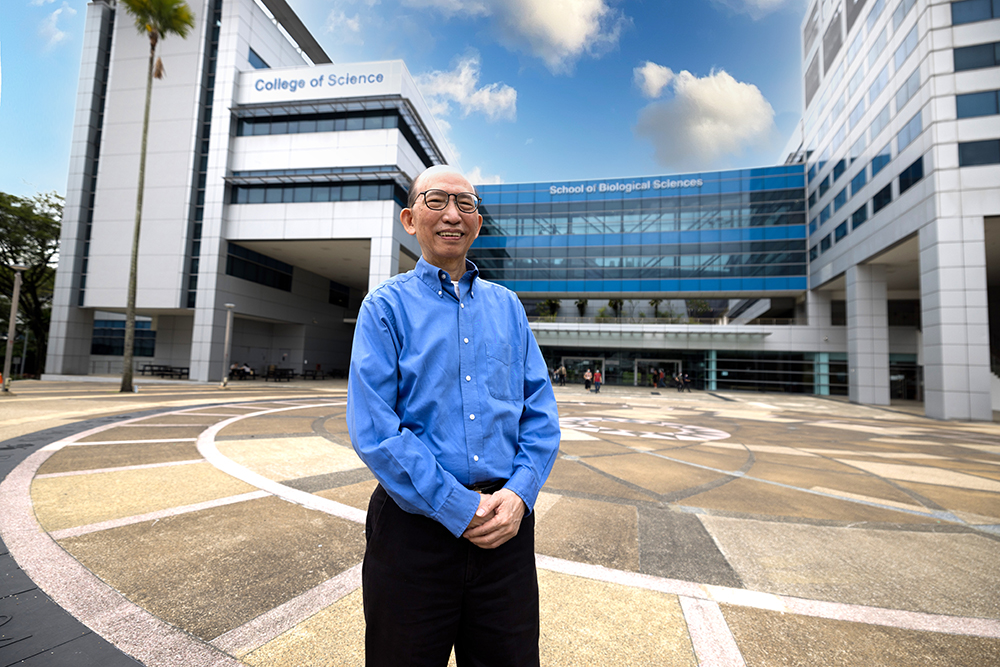
Tam's group discovered butelase-1 from butterfly pea (Clitoria ternatea) — the first Asn/Asp-specific peptide ligase and fastest peptide ligase known. It cyclises peptide backbones with >95% yield, 20,000 times faster than the previously standard sortase A enzyme, transforming how cyclotides and cyclic peptides are produced in the lab.
Full profile →University of Southern California — USA
Chemical synthesis • Drug grafting • Cancer & HIV scaffolds
A leader in the chemical synthesis and biological engineering of cyclotides. Camarero pioneered grafting scaffolds targeting CXCR4 (HIV/cancer), p53, and RAS/RAF signalling pathways. His "plug and play" grafting approach bypasses difficult oxidative folding steps, producing grafted cyclotides with nanomolar GPCR affinities for drug discovery.
Full profile →James Cook University — Australia
NMR structural biology • Cyclic cystine knot architecture
Central to the structural characterisation of cyclotides by NMR spectroscopy, Daly's work underpins our 3D understanding of the cyclic cystine knot and its plasticity for drug design. She co-founded Paragen Bio, a startup commercialising disulfide-rich peptide drug discovery based on this structural knowledge.
Full profile →Explore individual researcher profiles, their key papers, and active projects — see all researchers →
The global industry
From functional foods grown in robotic farms to $220M oncology deals, cyclopeptides are moving from research labs into the commercial world.
Phyllome grows therapeutic cyclopeptides directly inside edible plants using indoor robotic vertical farms — creating functional foods that deliver measurable health benefits without pills or injections.
In partnership with Prof. David Craik at UQ's IMB and Australian supplements leader Pharmacare, Phyllome is the first company to commercialise cyclotide technology in consumer functional foods, targeting pain, cholesterol, and obesity.
Commercialised Sero-X — the world's first cyclotide-based commercial product. The organic biopesticide is derived from butterfly pea and approved for use with no upper limit, safe for bees and pollinators.
$117.5M raised to develop macrocyclic peptides that penetrate cells and hit intracellular drug targets previously considered undruggable.
Insamo, Unnatural Products, CyclicTx, Chugai/Roche and more — see the full global industry overview →
For the first time, the therapeutic compounds of the future can be grown in crop plants, harvested, and consumed as food. Cyclopeptides are not just a scientific curiosity — they are a new category of medicine.