The Researchers Behind Cyclopeptides
Cyclopeptide science was built by a global community spanning Norway, Australia, Austria, Sweden, Singapore, and the United States. These are the scientists whose work — from first isolation in 1960s Congo to clinical trials today — created one of biology's most remarkable fields.
The Discoverer & The Field Builder
One physician who found something extraordinary in an African tea. One structural biologist who spent decades explaining why it was extraordinary.
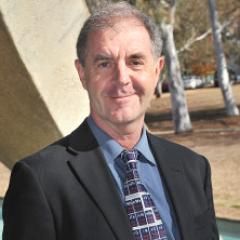
World's foremost authority on cyclotides. Craik's group established cyclotides as a protein family, characterised the Cyclic Cystine Knot motif, and pioneered the drug-grafting technique that turns any injectable peptide drug into a potential oral medication.
His ~35-person team at UQ's Institute for Molecular Bioscience has active projects in pain (conotoxin grafts delivering 100× greater potency than gabapentin), obesity (potatoes expressing therapeutic cyclotide sequences), and cancer (sunflower and soybean). Industry partners include Pfizer, Roche, AstraZeneca, and Takeda.
Craik directs the ARC Centre of Excellence for Innovations in Peptide and Protein Science (CIPPS) and the Clive and Vera Ramaciotti Facility for Producing Pharmaceuticals in Plants — making UQ the global headquarters of cyclotide drug development.
The original discoverer. In the 1960s, serving as a Red Cross physician in the Congo, Gran observed women drinking kalata-kalata tea to accelerate labour and delivery. Intrigued by its remarkable effectiveness, he spent years isolating the active compound — kalata B1 — and published his findings in 1973.
But the analytical tools of the era could not reveal the cyclic structure. His papers went largely unnoticed for 20 years, until the NMR revolution of the 1990s confirmed that his remarkable discovery contained something structurally unprecedented in biology: a protein with no beginning and no end, its structure locked by three interlocking disulfide bonds.
Gran's clinical observation — a physician watching women in the Congo brew a leaf tea — stands as the origin of one of the most promising drug platforms in modern pharmaceutical science.
Full profile →Researchers Across Five Continents
A tightly interconnected network of scientists — many of whom trained in each other's laboratories — who together built the modern field of cyclopeptide science.
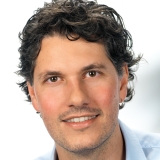
Gruber led the Global Cyclotide Adventure — a systematic survey of 340+ flowering plant species across five continents to map the global diversity of cyclotides. The effort dramatically expanded knowledge of which plants produce cyclotides and how structural variation relates to biological activity.
His most clinically significant achievement is engineering T20K — a single-point mutant of kalata B1 that shows immunomodulatory activity and halted MS progression in animal models. T20K became the first cyclotide to enter human clinical trials, taken orally for multiple sclerosis, licensed to Swedish biotech Cyxone AB. Gruber's group also leads research in GPCR-targeted cyclotide drug design. He was named Inventor of the Year 2015 at MedUni Vienna.
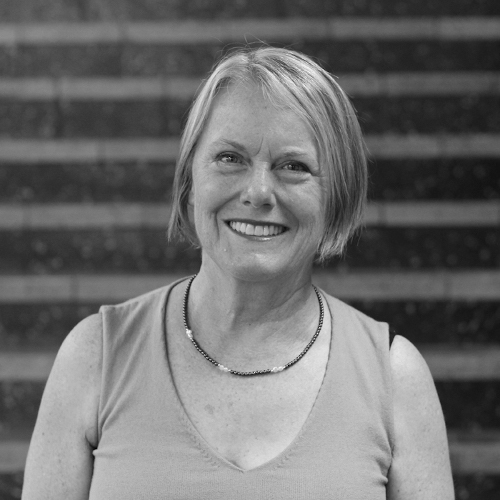
Anderson made foundational discoveries in cyclotide biosynthesis — demonstrating that cyclotides are encoded by single genes and cyclized in plant vacuoles. Her work transformed understanding of how plants produce these remarkable molecules and opened the door to engineering crop plants to express cyclotides at scale.
Her discovery of cyclotide-like sequences in graminaceous crop plants including rice, maize, and wheat suggests an ancient evolutionary origin far broader than initially suspected — cyclotides may be a near-universal feature of the plant kingdom. H-index 67, over 13,700 citations across 162 publications.
Full profile →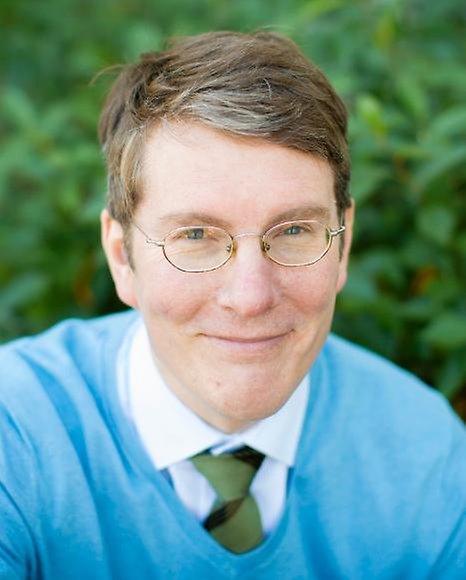
Göransson serves as a direct scientific bridge between the Craik and Gruber laboratories — completing his PhD at Uppsala, a postdoctoral fellowship at UQ with David Craik, and then returning to establish Sweden's leading cyclopeptide research programme.
He is the world leader in discovery and characterisation of cyclotides from European violet species, dramatically expanding the known structural diversity of the family. His group develops novel antimicrobial cyclic peptide scaffolds as potential alternatives to conventional antibiotics — an area of critical global importance. Over 11,600 citations.
Full profile →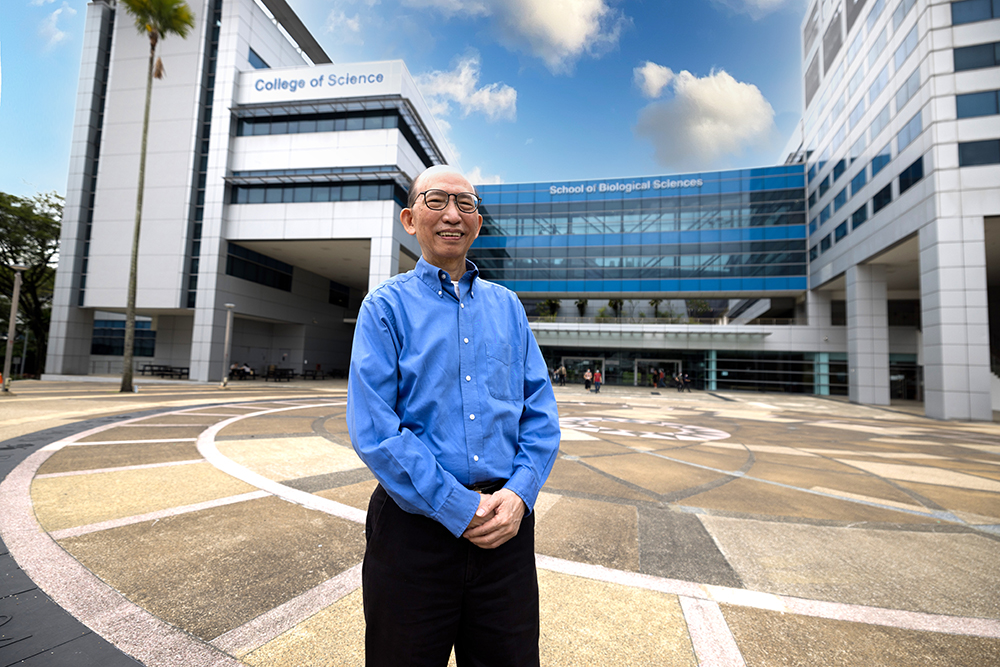
Tam's group made one of the most practically significant discoveries in the history of cyclopeptide science: the isolation and characterisation of butelase-1, from butterfly pea (Clitoria ternatea). Butelase-1 is an asparaginyl endopeptidase and the first Asn/Asp-specific peptide ligase — an enzyme that joins peptide chain ends with extraordinary efficiency.
It is the fastest peptide ligase known: cyclising peptides with >95% yield, operating 20,000× faster than the previously used sortase A. Published in Nature Chemical Biology (2014), the discovery transformed laboratory and industrial production of cyclic peptides worldwide, making it feasible to produce cyclotide variants and drug grafts at meaningful scale.
Full profile →
Camarero is the leading figure in chemical synthesis and molecular engineering of cyclotides for drug discovery. His group pioneered grafting scaffolds targeting CXCR4 (a receptor implicated in both HIV infection and cancer metastasis), the tumour suppressor p53, and the RAS/RAF oncogenic signalling pathway.
He developed the "plug and play" grafting approach that produces nanomolar GPCR-active cyclotides in a modular fashion — enabling rapid drug candidate generation. Over 120 publications; research funded by NIH, the Department of Defense, and the American Cancer Society.
Full profile →
Daly was central to the structural characterisation of cyclotides by NMR spectroscopy — the technique that finally revealed, in 1995, the cyclic cystine knot structure that explains their extraordinary properties. Her work underpins our three-dimensional understanding of the CCK motif and its remarkable plasticity for drug design, showing which loops can accept inserted sequences without disrupting the core.
She co-founded Paragen Bio, a company commercialising disulfide-rich peptide drug discovery based on this structural knowledge. Daly's research also extends to conotoxins — the venom peptides of cone snails — which share structural features with cyclotide drug scaffolds.
Full profile →Cyclopeptide research is genuinely international — spanning six continents and built by scientists who often trained in each other's laboratories, creating a tightly knit global community. Göransson did his postdoc with Craik. Gruber's T20K is based on Gran's original kalata B1. Daly's NMR work gave Camarero's grafting its structural foundation. This is science as it works at its best: incremental, collaborative, and cumulative across decades.
Explore the science these researchers built
From the structural biology of the cyclic cystine knot to the clinical trials underway today — the story of cyclopeptides spans six decades and five continents.